
For the next few weeks, both Blush posts and Fandom Travel posts will be guest posts. Thank you to the contributors! If anyone else is interesting in writing for either of these topics (and it can easily be kept anonymous!) please send me an email to jenericdesigns@gmail.com and we can discuss which topic you’d like to write about.
This week’s Blush guest post is written by Nathan Frechette, and you can follow him on Facebook here. Nathan is originally from Montreal, but has been living in the Ottawa/Gatineau region since 2004. He is a sequential artist and author. He has published several short stories, both sequential and traditional, as well as two graphic novels and six books. He was the editor and director for the French Canadian literary magazine Histoires à boire debout, and works at the Ottawa Public Library. He now is the editor and director for Renaissance Press. He has been teaching creative writing since 2005, and GMing various table-top RPGs for the past 19 years.
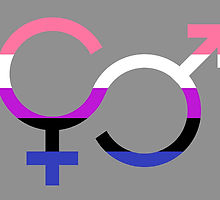
I’ve always known I was different. Not just a little different, but completely apart from others, something else entirely. When I was a child, I used to think I must be an alien. Another species. Because there was no one like me.
Sure, I wore my hair short, I wore trunks to swim, and I sometimes pretended to be a boy when I was with kids I just met. I identified with men as the heroes of my stories. Often, I wished with all my heart that I was a boy.
Except I didn’t not want to be a girl. Not all the time, anyway.
Some of the days, I hated the body I was born into. Pudgy, awkward, too tall and too short at the same time, and female. Especially female. But sometimes, very few times, but still sometimes, I did enjoy being a woman. I tried growing my hair long and braided it in fancy ways, and I hated it as often as I loved it but most of the time it was OK.
I’m thankful there was such a thing as tabletop role-playing games. They allowed me something I never had the courage to do in real life: go by a male name, be referred to as “he”, and all in the comfortable illusion of fantasy, which was just pretend and could be over at any time, and didn’t commit me to any revelation about myself. The happiness of being able to explore the male aspect of my personality, which is the dominating side, made me quickly addicted to these games. I started playing them with my cousins when I was only twelve, and by the age of 17, I was spending all my time – and I mean, all of it, outside of work and school, I spent 2 hours sleeping every night and every other waking moment I was doing this – on a chat software called MIRC, role-playing with a group of people from all over the world, as several characters (all male, of course). Sure, I got teased a lot for playing almost only male characters, but that didn’t matter to me (beyond reinforcing the idea that I could never tell anyone what was going through my head, of course).
I got a little bit more daring with chat groups; even during the times where we were, as we call it, OOC, or Out Of Character, I still pretended I was a boy – because doing it as a character in a fantasy game wasn’t enough anymore. I quickly got outed as “a girl” and I had a really hard time explaining to my friends why it was important to me that they see me as male, at least some of the time. In fact, I had a hard time explaining to anyone – even people in the queer support groups I visited as a teen – what was going on in my head, what I was going through with my gender identity. Non-binary identities weren’t that well-known in the early 90s, back when very few people even knew about the internet, let alone used it.
It was in high school that I first learned what transgender was and I kind of felt like it applied to me, because I did want to be a boy, but hesitated to use it to label myself, because I didn’t want to stop being a girl. Thinking about it, exploring it, I realized that I didn’t think I’d ever want surgery, because I wasn’t ready to lose my body, no matter how I felt about it. So even that didn’t fit me. I felt even more alone, because I thought I’d found something that defined who I was but it didn’t, really. Because I’d never fully transition. That much was always clear to me: I’d always have one foot left in womanhood. Being pregnant and having children made me even surer of this than I was before: no matter how triggering my period got, being a woman was wonderful at times.
My first inkling of my true gender identity came through a book, a science-fiction novel, actually (which seems very fitting, after thinking I must be a secret alien for so long). It was Ursula K. Le Guin’s The Left Hand of Darkness, a novel about a planet on which the inhabitants are not male or female, but rather exist as both and neither, in a state of neutrality most of the time except for a few days a month when they become fertile, and gain the physical attributes which most people associate with male or female, so they can reproduce. Not everyone gets the same sex every time; it can vary depending on the month, so that most people who have children are father to some, mother to others.
That book was a revelation. The concept of being one gender AND the other, depending on the day, was exactly what I had felt my whole life but couldn’t put words on. I still wasn’t able to put a word on it, and the irony that the characters were aliens was not lost on me, but still, it made me feel a little better, like there was someone else in the world that was thinking these things, since she was writing about them. I still felt like a freak, not one thing and not the other, but there was at least one other person in the world who had had these ideas.
I put it aside at the back of my head, and tried to move on with my life. I started writing more seriously, and as I started to examine what I was writing, I came to realize that most of my characters were male, so much so that some of my stories didn’t even pass the low bar of the Bechdel test. As a feminist, this bothered me a great deal, and I tried writing in more women, but I never felt as whole as I did when I wrote about male characters. They permitted me to express my stifled masculinity, to live through them the identity I wanted for myself.
It wasn’t until a good decade after that, when I started a relationship with my wife, that the last of the pieces of the puzzle that was my gender identity fell into place. Since she was a transgender woman just coming to terms with her identity and starting to transition, I started doing some research, and getting involved in online communities so I could support her to the best of my abilities. And this is how I found out about non-binary gender identities, and most important of all, the term “genderfluid.”
There are no words to describe the feeling of finding a word that fits exactly who you are, how you feel. At long last, you aren’t just a lonely freak, an alien, different from everyone else in the world; there are others like you, lots of others, enough of them that there is a widely-used word to define it. It’s suddenly belonging, finding your people, being understood. It’s your entire existence being validated; it’s such an emotional rush that defies description. There are those who sustain that “all these labels are divisive” or that they are “unnecessary”; but really, labels can be life-saving. They have the ability to unite you, make you feel part of a community; to make you feel like what you are going through is not only normal to some degree, but also that you are not alone.
I still write about men. Gay men, actually, a lot of the time, because this allows me to express my queerness (I’m also pansexual, which is a whole other thing to explain) as well as my masculinity, and I’m getting more and more comfortable with that; it’s a healthy way of exploring my masculine side in the safety of my own head, and it makes me feel balanced.
For now.