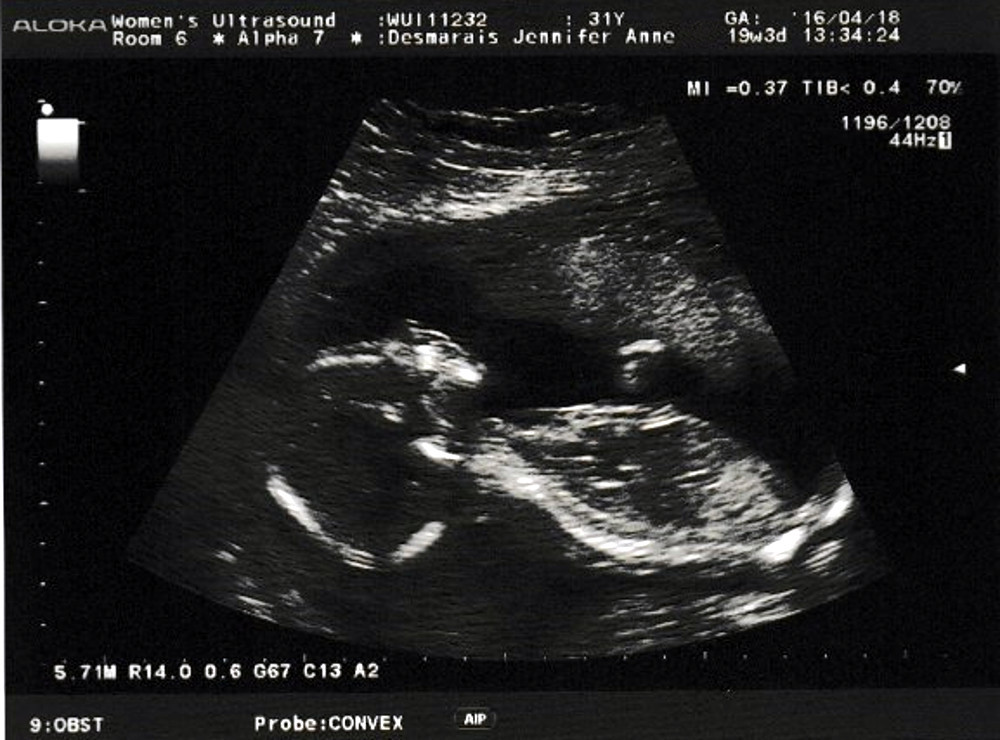
On Monday of this week, we found out the sex of our baby Dragon. When it cam time to write the poll question for yesterday’s post, we briefly puzzled over whether to write “sex” or “gender”, because those terms are so often used interchangeably when discussing a baby. After some research, we found our answer.
Question
What’s the difference between “sex” and “gender”?
Answer
Sex refers to whether the sex organs identify a person as male or female at birth. Factors which determine sex, such as chromosomes, gametes, internal organs, and hormones, don’t usually factor into determination at birth, which is why a ton of intersex conditions go unnoticed at first. When discussing a baby, unless you opt for the intensive DNA profiling, you determine the sex by the external sex organs…does the baby have a penis or vulva?
Gender refers to the roles that society places on a person based on their sex. Male, female, genderqueer, agender, and gender fluid would be words used to define gender. Gender identity can only be given by the person in question. This is definitely not something that an ultrasound can tell.
I’m wrestling with an extremely large project today so it’ll be a quick blog. Just 3 things: Contest Winner, more pictures of Dragon, and a guessing game.
Contest Winner
We ran a contest to encourage people to pledge to Blush. They just had to be a backer and enter the contest to win.
Without further ado, the winner is A. Reeder! Congrats!
The $50 is good for conventions or online. Just let us know what you’d like.
Dragon
Aren’t they cute? (I’m sure every parent says that.)
We found out the sex yesterday, but Jen’s graduating class is running a contest to guess, so we can’t tell you until later this week. This gives you guys a chance to guess! Which do you think? Boy or girl?
There are only four days left in our Kickstarter campaign. We are close. SO close! You only have until midnight on Sunday April 10th to pledge, so PLEASE go and support our Kickstarter!
This past week has been rather… Surprising? Unique? Crazy? I’m going to go with all of the above.
For those of you who don’t know me, I’m a shy person. You’re my friend? I’ll blabber on about whatever comes into my head. You’re alone and I’m alone and we’re complete strangers? No problem striking up a conversation. You’re wearing something geeky? I will talk to you whether you’re in a group or not. Put me in front of a group? No way. I will blush (no pun intended), stammer, forget the thread of conversation (or presentation), and generally be very uncomfortable and awkward.
And this past week has been pushing my boundaries. I’ve had two “print” interviews, one by phone for an article for Apt 613, and one in person for an article for the Metro. And I was interviewed on CBC Radio with my dad for the segment All in a Day. You have no idea how grateful I was that my dad was there. As much as I was able to convince myself that it was simply another one-on-one conversation with Alan Neal (who was super awesome, and a great interviewer), I still had problems getting my words out in the order I wanted them, and forming sentences that actually made sense. My dad, on the other hand, was brilliant. Not only did he get the conversation around to the game (the whole point, really), but he was funny and intelligent the entire time. So glad he was invited, and agreed to join me.
One thing that I have noticed, throughout these three interviews, is that I am asked a variation of the same main questions, although the written words are extremely varied. So I thought I would write down some of the most frequently asked questions, and answer them.
What was the reason behind this game? How did it come to be?
The game started out as a project for my Adolescence class at the University of Ottawa. The project was very open-ended; we had to research a topic that was related to adolescents. After a very brief brainstorming session, and a class on Human Sexuality later that week, I realized that the most obvious choice for my topic was adolescent sexuality. You can read my paper here. This was possibly the easiest paper I have ever written in my entire life (to date). The words came easily, I would get to a point that needed proof, the studies that provided the proof were easily found, and I was done in a matter of days.
As my research found that parents and their kids had a better relationship, built on trust and mutual respect, if they spent time playing games together, I decided to expand my project (with the professor’s permission) into a physical game that taught the facts of sexuality, sexual health, and identity. The original concept was very Trivial Pursuit-esque, with a board game and pieces, dice, and collecting parts to win. It was a huge undertaking, and would be very expensive to produce. I also didn’t particularly like how similar it was to Trivial Pursuit, but I couldn’t think of another way of formatting it. (I got 100% on the project, and my professor made me promise to develop it.)
Fast forward 8 years, and I was having a conversation with one of the founders of Renaissance Press about projects that we were particularly proud of in school. Blush was obviously one of those, and they asked to borrow the prototype. When they brought it back with a contract, and an idea of how to make the rules different, I was in shock. Definitely changed my life! I started the anonymous question box and this portion of the blog at that point.
What are the rules for playing the game?
Each player takes a turn asking a question and reading the four possible answers out loud. Other players then vote for the answer they think is the right one, their voting cards face down. They flip the card over al at the same time once everyone has voted. Correct answers get a point token. Next player clockwise reads the next question, and so on. First player to get to ‘x’ points (decided at the beginning of the game) wins.
How old would you recommend the kids to be to play this game?
The redesigned questions complement the new Ontario sex education curriculum, so you could play portions of the game with your kids as early as Grade 1. As parents, you are allowed to take out the cards that are too advanced for them (recommended), and reinsert them as your child grows up. To play the game as a whole, without removing cards, age 12-13 is an approximate. If you feel they’re ready earlier, that’s fine too!
I read something the other day that fits in well here. “What age do you think kids should know about sex? Remove two years, and that’s much more likely.”
If you’re a parent with an infant, and you’re not sure whether you’ll use the game, I can see where you’re coming from. My first child is due in September, and Grade 1 feels INCREDIBLY far away. However, Blush doesn’t expire! And in the meantime, you can play it with your friends, even as a drinking game. (Be prepared to get drunk very quickly if you do, though. The questions can be harder than you think!) This goes for people without children as well. How well do you remember your own sex ed classes? Do you think you know everything?
There were lots of other questions that I was asked multiple times, but this post is getting a little long, so I will leave you with a question that I wish I HAD been asked, because I think it’s a rather important one:
What qualifies YOU to write this game? Why should we trust your facts?
My educational background has provided me with thorough researching skills (1), an understanding of human sexuality (2), and the knowledge of how to teach through different methods (3).
BSc in Biochemistry and Chemistry
BA Soc[ial Science] Major Psychology (with a focus on Human Sexuality) Minor Biology
BEd I/S Chemistry and Math
I have been extremely thorough with my research into this game, and will go over the questions again with a fine-tooth comb before it is published. My publisher, Renaissance Press, has already edited the questions, as well as sent them off to UofT’s Sexual Health Centre, to have a second pair of eyes look at the questions.
I feel as though all of my educational and personal background has led to this game. It is a major part of me, and with your help, will come into this world before my first-born child!
Blush’s kickstarter is doing well, but we still have a long way to go, and about two weeks left! Please keep harassing your friends and family, and add neighbours into the mix! Let’s make this game a reality!
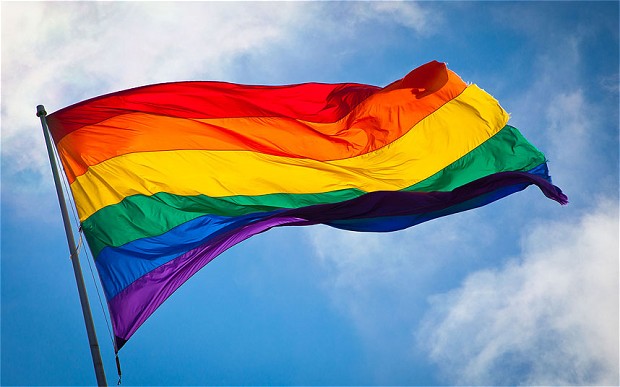
Algonquin College, my school, has their Pride Week this week. I had the opportunity to attend a workshop yesterday afternoon, given by the fantastic people at Venus Envy Ottawa (Facebook, Twitter), on Bi/Pan/Poly relationships. The speakers were very well educated and gave thoughtful and insightful answers to all our questions. I thoroughly enjoyed myself and learned a lot.
This is what Pride means to me. As an Ally, I sometimes feel adjacent to what the Pride movement stands for. I loved the inclusiveness that taking part in something as minor as a workshop gave to me. On top of feeling as though I belonged, I was able to learn more about how to respect people in those relationships previously mentioned, and how to break through the myths surrounding the stereotypes.
Pride Week, to an Ally like me, is about education on different types of relationships and sexualities. It is about showing support and respect to everyone. It is about welcoming other human beings and accepting them for who they are.
Thank you for such a great workshop. I definitely won’t forget it!
Algonquin’s Pride Week will continue today and tomorrow, and has various workshops free to the public. Check out their calendar of events here.
Don’t dread “the talk.” Blush makes it fun, and approachable… no matter what the questions are. Please help make this sexual health trivia game happen by backing our kickstarter! https://www.kickstarter.com/projects/1357195744/blush
Contest
Pledge any amount you want to the Blush Kickstarter and then enter below to win a $50 gift card for any JenEric Designs products.
[contesthopper contest=”3685″]
Disclaimer
Jen, of JenEric Designs is the author of Blush and is working with the awesome publisher Renaissance Press to make Blush a success. Learn more about the game on the Kickstarter or on Blush: A Card Game.
Blush’s Kickstarter is now LIVE! Please share this link on Facebook, through email, and in person with everyone you know! You never know who might want it (everyone, hopefully). Here is the link: www.kickstarter.com/projects/1357195744/blush
Renaissance Press is publishing the game. I’m so lucky to have such a great team with me every step of the way!
If you didn’t think I was going to talk about pregnancy, you don’t know me very well. I’ve been saving up the questions, because I was afraid I’d be giving something away if I talked about it earlier!
This is my baby! Meet dragon. 😀 They are asleep in this picture, with their legs crossed at the ankle and both hands are on their forehead. Too cute.
Question
If I take a pregnancy test, and there’s a faint second line or plus sign, does that mean I’m pregnant?
Answer
Most likely. It is very difficult to have a false positive, but you can double check in a few days with another test (use a different colour of test, so if you had blue the first time, get a pink one, and vice versa) or by going to your doctor.
This is what happened to me. I took a test on New Year’s Eve morning, not because I thought we might be pregnant, but because if I didn’t take one, I’d spend all of my period wondering if it was less than usual, and was I actually pregnant? (Because you can still get your period while pregnant.) I was very surprised (but thrilled) to see a faint second line, and that’s when we found out that a faint line means positive, after scouring the internet for proof. We still took a second test on January 3rd (plus sign, this time), and then I went to the doctor for confirmation and to start all the things that need to be started.
Question
What does a pregnancy test measure? And why are there different kinds of test? Is one better than the others?
Answer
Pregnancy tests measure the amount of hCG hormone. hCG stands for human chorionic gonadotropin, and it is a growth hormone that helps your baby, well, grow. As your pregnancy progresses, more of it is in your system, until it levels out at around 12 weeks. Doctors are suggesting that “morning” sickness is the body’s reaction to this hormone. Some people can handle its presence better than others, and so feel less illness than others.
There are different kinds of tests because some are more sensitive than others. The digital ones are *usually* more sensitive than the lines or plus/negative ones, but that doesn’t make the latter bad. It’s best to wait until just before your period anyways, so that you have a normal amount of hCG. On the side of the box, there is a place that says the test’s sensitivity – it will either be 10 or 25 mIU/mL. 10 is more sensitive than 25.
They are all testing the same thing (amount of hormone). You could go to the dollar store and buy a test, and it would be just as accurate (if not expired) as one from the drugstore.
If you have any questions (because there are a LOT of questions to be asked out there) fill out our anonymous question box, and I will answer them. And possibly include your question in the game! If we reach our first stretch goal, we’ll be adding 50 more questions to the game, so spread the word!
The questions have been written and sent to the editors but if you’d like something answered on this blog feel free to ask us your anonymous questions!
Hello S. M. Carrière. Thank you for answering my questions today!
My pleasure!
For those who don’t know, what is demi-sexual?
A demi-sexual is someone on the asexual spectrum who requires a strong emotional bond with a prospective partner before there is any chance of sexual attraction. Which is to say, they don’t experience sexual attraction except in certain, quite particular, circumstances. I should note here that a strong bond doesn’t necessarily equate sexual attraction, either.
How did finding out that there was a name for your sexuality affect how you saw yourself?
Honestly, the fact that there was a name for my identity gave me such a sense of relief. I suddenly felt like I wasn’t a freak, after all. Enough people are like me that they have a name for it, and it describes my identity almost perfectly. It certainly has helped in giving me the language necessary to describe myself to others, and it’s a language that helps normalise my experiences. That’s huge. It’s helped me so much, especially in raising my self-confidence.
Are there any fictional characters you believe represent demi-sexuals in a positive way?
No, actually. I’ve been racking my brain to find a character who is explicitly demi-sexual that I am aware of. I can’t think of any at all. Asexuals of any stripe are wildly under-represented in media, it seems.
What kind of reaction do you like the most when people are told you are demi-sexual?
“Oh. Okay.”
Not to have your identity put under an aggressive cross-examination is refreshing, and I always feel less judged, less freakish, and less alone when the people I confess to aren’t really bothered about my sexual identity.
What kind of reaction do you dislike the most when people are told you are demi-sexual?
People can get ridiculously patronising when they find out, as if I couldn’t possibly understand my own identity as well as they understand me. There’s usually some variation of: “Oh sweetie, you just haven’t had good experiences.” It’s so frustrating and diminishing and, depending on who says it, quite upsetting.
I’ve also had the slimy: “Come home with me, I’ll change your mind.” My sexual identity is not a challenge to be overcome, and acting like a sleaze is generally not conducive to forming that bond I require before I even entertain the idea of sex with someone.
Honestly, I’m not entirely sure which is worse.
Why do you think people have such strange reactions?
Not a flipping clue. I understand not comprehending something outside of one’s experience, but acting as if asexuality and the various identities along the asexual spectrum don’t exist is really confusing to me. Lack of comprehension should prompt questions, not outright denial. I remain confused and bewildered by some of the reactions I’ve received.
Are there any attitudes or societal norms that are frustrating for demi-sexuals?
I cannot pretend to speak for all asexuals, but asexual erasure really bugs me. In a culture obsessed with sex, being someone who isn’t can make things tough. It’s tough relating to people a lot of the times. It’s worse when people outright disbelieve you, and try to come up with all kinds of psychological reasons, or other possible explanations for your sexuality. It’s a slap in the face, because it’s tantamount to being called a liar, or broken/wrong/somehow deficient, or that an integral part of what makes you you simply doesn’t exist.
Do you know other people in the demi- or asexual spectrum?
No, actually. At least, none that have openly identified as demi- or asexual.
Are there any communities and support groups (either in person or online) for people discovering themselves?
I’m a huge fan of The Trevor Project, which gives information on pretty much all sexualities. It’s where I first discovered that asexuality was a thing, and that it didn’t mean I was broken/wrong/somehow deficient. There are a couple of great YouTube channels that cover all kinds of stuff about sex and sexuality: lacigreen (Sex+) and Sexplanations. Watching those in the early stages of self-discovery really helped open my eyes and got me asking the right questions. Sexplanations led me to asexuality.org.
What is one question that you wish you could be asked about being demi-sexual?
Where can I learn more?
That would be nice. No arguments about whether or not my identity is a real thing (it is), no sleazy propositions trying to get me to change my mind, just, “I don’t get it, where can I learn about it?”
Born in 1983 and raised in various countries around the globe, S.M. Carrière has always felt drawn to epic tales of heroes and villains. An avid reader herself and despite always writing, she did not think of becoming an author until her final year of university, when she found herself compelled to the craft (when she ought to have been studying). She self-published her first title, The Dying God and Other Stories, in 2011 at the urging of a friend, and has not stopped since, publishing one book each consecutive year.
We are filming for the Kickstarter THIS Friday, February 12th, 2016 in the Algonquin College Student Commons (E building in Ottawa) from 2:30 to 3:30 pm. Do you want to help out? Come and be in our video! We’ll be asking some easy questions and some tougher ones from the game for the video, and don’t be afraid to get the answer wrong – this is all about learning!
I haven’t talked much about physiology yet. Let’s remedy that!
Question
What is the clitoris?
Answer
The clinical definition is that it is the sensitive part of the female sexual organs, and it’s only function is to provide pleasure. Who knew that women were the ones that had a body part solely dedicated to pleasure!
There is a lot to be learned about the clitoris. For one thing, it’s a LOT bigger than most people think. Only a tiny portion of it is visible; the rest is hidden inside the body.
This image should look somewhat familiar to those of you who have studied anatomy in school, or if you have a penis. This is because the equivalent anatomy in a male is the penis.
Like penises (peni?), clitorises (clitori?) vary in shape, size, and colour. They also vary in amount of stimulation needed. Some women prefer direct contact, others prefer proximity.
I have completed the initial 200 questions necessary for the Blush card game! However, they are now with the editor, and I might have to add new ones. If you desperately want a topic covered, ask us your anonymous questions here!
I received a variety of questions asking “What do I do if my partner isn’t in the mood?”
Answer
Talk to your partner. Find out if they would prefer to be left alone or cajoled out of their mood, without putting pressure on them. It might be a good idea to ask this in advance, so that you don’t put pressure on them at the time.
“If you’re not feeling in the mood, what would you like me to do?” is a good way to ask them.
Sometimes people aren’t feeling up to doing it, just like I was feeling about writing this blog post. I had a really long day and didn’t feel like I’d done very much, because I hadn’t had the chance to tackle more than one thing on my to-do list today. (Plus, I have a headache.)
The most important thing is to know your partner. How can you make them feel better? How can you make them feel loved and cherished? What do they need? Instead of focusing on getting your partner in the mood (which usually doesn’t end well, unless they want to be – see the question you can ask them above), think of other ways to hang out with them. Intimacy is more than just sex.
Suggestions for ways to be intimate without sex can be submitted in the comments! Here are a few of my favourites to start you off: brushing my hair, or snuggling on the couch.
I have completed the initial 200 questions necessary for the Blush card game! However, they are now with the editor, and I might have to add new ones. If you desperately want a topic covered, ask us your anonymous questions here!
This week, I’m doing something a little different. I met Lily through the Adult Nerdfighter group on Facebook, and she’s been brilliant, funny, positive, and intelligent in all her comments and posts. Then I found her blog, was impressed by her quality of writing, and got the idea to do an interview-style post about transgender with her, seeing as she is open about talking about her experiences. I hope you like it!
Hi, Lily. Thank you for answering my questions today!
No problem! I’m happy to answer them.
What sort of questions do you get asked all the time when someone finds out that you are transgender?
Uh, you mean besides what my genitals look like? Ha. People tend to be mostly respectful, apart from that. When they feel comfortable, they sometimes ask me what I like about being a woman, or what differences I’ve noticed in how people treat me.
Why do people ask such personal questions about your body? Do they think they can get away with it?
I don’t know, maybe they just want to learn more. It definitely is a sense of entitlement. A lot of people seem to think they have a right to make someone uncomfortable just so they can have their curiosity sated.
What was the response from your doctor when you first told them that you were transgendered and wanted to do something about it?
Oh, we don’t have “a doctor” the way our medical system works. I just get assigned to visit a random one if I have anything I want a medical opinion on. None of them blink an eye when I tell them, though lately that I’ve started to look more and more like any other woman there have been some awkward moments when they ask me when I had my last period, or whether I might be pregnant.
Do you think you would have had a different response in another country, like Canada or the USA?
Possibly. It depends on the region. Someone in Bogotá, where I live, might not react the same way as someone in a pueblo, a traditional small town. I think the same applies for the US and Canada. A doctor in South Carolina is more likely to act a different way than one in New York.
When were you/will you be allowed to change your name legally? What was it like to see your first ID with your name on it?
Oh, I did that ages ago. Haha. I was given a temporary ID with my name about 6 months ago, and got my shiny official ID with a big “F” and my name on it about 3 or 4 months back. It felt wonderful. I still get a giant grin on my face everytime I look at it.
I really liked how you described gender dysphoria in your post last week. Can you summarize it here? Gender dysphoria just feels plain wrong. Imagine a row of carefully lined pencils, with one single pencil skewed 3 degrees to the side. Do you feel uncomfortable just thinking about it? Gender dysphoria is something like that, only a lot stronger, much more depressing, and ever-present.
You explain that so well.
Do you find that people treat you differently as a girl?
Absolutely. Women are more open to me, and men are a lot more polite, respectful and gentle (except for the creepy minority who hit on me now, of course)
What would you say to someone who is just starting their transition?
There are a lot of things that will make you feel like giving up. Keep going.
What is one question that you wish you were asked, and how would you answer it?
“How can I make life easier for other transgender people?”
I would say to just treat us like human beings. People tend to avoid you and walk on eggshells around you. It’s isolating and dehumanising.
Do you have a list of online resources or communities that you go to that makes you feel safe and unjudged? Will you share it with us?
Two main ones: There’s Adult Nerdfighters, a community on Facebook for nerdy open-minded people; and reddit.com/r/asktransgender/ a place where I can share some of my experiences and thoughts with people who have lived through something similar.
Thank you so much, Lily, for sharing your experience with us. Readers, follow her blog (idontstandstill.wordpress.com), she updates every Tuesday, Friday, and Sunday.


 Loading ...